
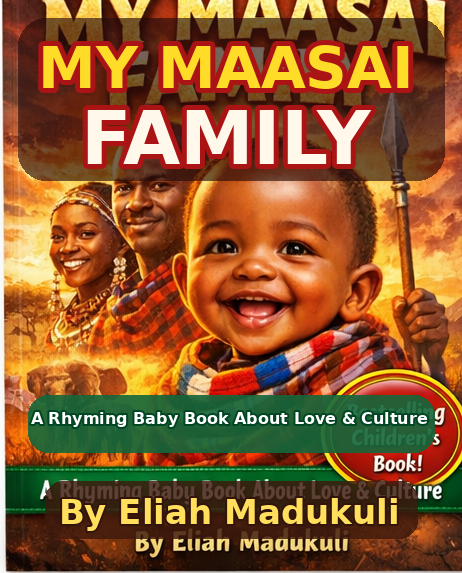
This Culture section grows out of Eliah Madukuli’s earlier educational website about Maasai life. The material has been edited for grammar, clarity and respectful modern language, while preserving the community-centered purpose of the original project.
How this section is written
Maasai communities are diverse. Customs may differ by country, territorial section, clan, family, age group, church tradition and generation. For that reason, these pages use words such as “often,” “historically,” “in many communities” and “can” instead of presenting every practice as universal.
The pages also distinguish between historical descriptions and contemporary life. Older ethnographies can be useful, but they sometimes repeat colonial assumptions or describe practices that have changed. Whenever possible, this website centers living Maasai experience and acknowledges education, Christianity, human-rights advocacy, urbanization and modern livelihoods.
Selected references and further reading
- Eliah Madukuli, Know the Maasai People, original Weebly cultural education project.
- Heather D. Switzer, When the Light Is Fire: Maasai Schoolgirls in Contemporary Kenya, University of Illinois Press / Oxford Academic, 2018.
- Research in Pastoralism on livelihood diversification and land tenure among Maasai communities in Kenya and Tanzania (2020).
- Research in Regional Environmental Change on formal education and pastoral adaptation in southern Kenya (2024).
- Research in Rangeland Ecology & Management on Maasai age-set systems, Indigenous knowledge and climate adaptation in northern Tanzania (2026).
- UNESCO, Indigenous Knowledge and Climate Change in Africa, including work with Maasai pastoralists in Tanzania.
- Michael Oehrl, “The Beaded and Associated Adornments of the Maasai,” BEADS: Journal of the Society of Bead Researchers (2025).
- Nicole M. Smith, research on Maasai women’s market activities and livelihood diversification in northern Tanzania, Journal of Development Studies (2015).
- University of Dar es Salaam research on Maasai climate-change adaptation in Morogoro Region, Tanzania.
- Current reporting and community sources are used cautiously to document contemporary cultural change, including the expansion of digital Maa music and women’s leadership.
Language note
Maa words can be spelled differently when written in English because dialects and transcription systems vary. Where a term has several common spellings, the website uses a widely recognizable form and avoids claiming that one spelling is universally correct.
Image note
The culture pages use images from the Maasai Nation media library and the creator’s existing projects. They are used to support cultural education and connect the Culture section visually with the wider Maasai Nation brand.
Help improve this resource
Culture is best documented collaboratively. If you are a Maasai speaker, elder, artist, educator or community member and you notice a term that should be corrected or a topic that deserves more detail, please contact Maasai Nation. The goal is to keep this section accurate, useful and respectful.
Suggest a correction or story