Early Learning
Young children need safe places to learn, play, communicate and build confidence. Strong beginnings help prepare them for school and life.
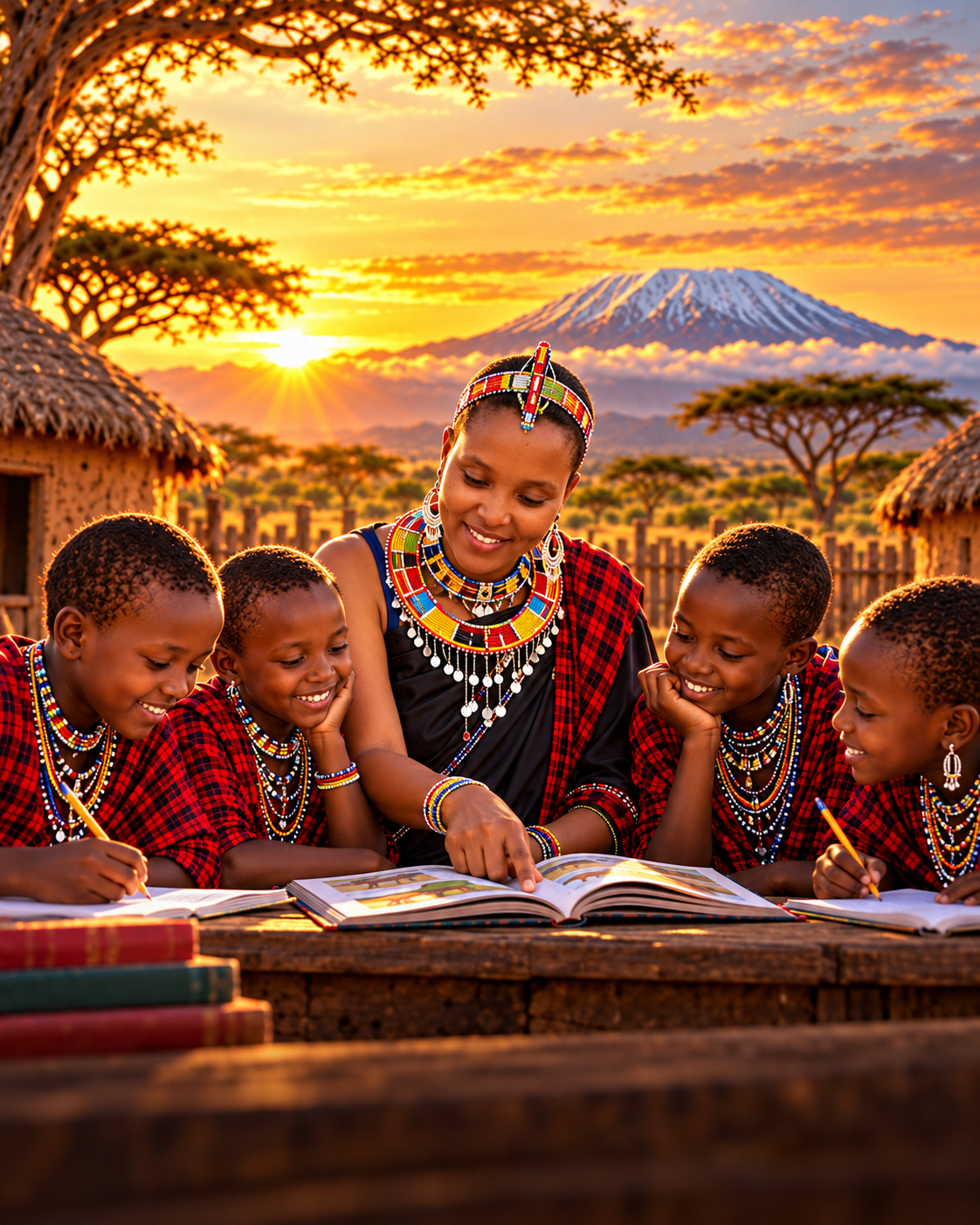
Strong foundations in school, language and lifelong learning.
Skills, confidence and opportunity for children and youth.
Education prepares future teachers, innovators and community leaders.
A dedicated voice for learning, girls and women, peacebuilding, youth opportunity and community leadership.
Ene Mkulati is a Maasai woman born and raised in Tanzania whose journey has taken her from schools and community work in East Africa to further university study and professional experience in the United States. Her studies at Northern Arizona University added business, hospitality and Public Administration to a background already rooted in education and community work. Her work connects girls’ education, women’s empowerment, youth opportunity, peacebuilding, community leadership, culture, social services and stronger pathways for children and families.
Tap a card to explore the learning opportunities that can strengthen Maa communities.
Strong beginnings for young children.
→ ♀Safety, dignity and equal opportunity.
→ ↗Learning for work, creativity and enterprise.
→ MaaLanguage, stories and identity.
→ ♥Guidance across generations.
→ ▣Technology, media and new skills.
→ ▲Learning to serve and lead.
→ +Healthy learners, stronger futures.
→ ★Opening doors to continue learning.
→ ☼Culture and opportunity together.
→Education works best when children, families, teachers and communities all have a place in the journey.
Young children need safe places to learn, play, communicate and build confidence. Strong beginnings help prepare them for school and life.
Girls deserve equal access to learning, safety and opportunity. Education can expand choice and strengthen future families and communities.
Academic, vocational, creative and entrepreneurial skills can help young people build meaningful livelihoods and contribute to their communities.
Language carries knowledge, memory and identity. Learning can celebrate Maa while also helping young people navigate wider educational opportunities.
Parents, elders, teachers and community leaders can help young people connect knowledge with values, responsibility and purpose.
Technology can widen access to information, creativity and training. Digital skills can strengthen education while helping culture reach new audiences.
Education can prepare young people to become teachers, health workers, entrepreneurs, public servants and community leaders who listen and serve.
Nutrition, health, safety and emotional support all affect learning. Student wellbeing gives children a stronger foundation to succeed.
Financial support, mentoring and clear pathways can help talented students continue their education when cost or distance might otherwise stop them.
A brighter Maa future can protect culture while expanding knowledge, technology, leadership, health and opportunity for the next generation.
Education does not have to mean leaving culture behind. The strongest future can combine Maa language, values and community knowledge with excellent schools, modern skills, technology and wider opportunity. That includes strong early learning, support for girls, mentorship for youth, healthy students, digital skills, scholarship pathways and adults who encourage children to dream beyond the barriers around them.